The Great Matcha Mix-Up: Ceremonial vs Culinary Matcha Explained
Walk into any tea shop and you’ll likely see two main types of matcha: ceremonial and culinary. One is often a vibrant green and carries a higher price tag, while the other might appear a bit duller and is significantly cheaper. If you’ve ever wondered what the real difference is… and whether that expensive tin is truly worth it… you’re not alone!
I’ve been there, and I suspect most people have. The good news is that once you understand what these two grades represent and how they’re made, choosing between them becomes much easier. No tea snobbery required.
Honesty About Matcha Labels
Here’s a secret the labels won’t tell you: “ceremonial” and “culinary” aren’t official, regulated grades. There’s no international matcha committee stamping approvals on each batch. They’re just marketing terms, shorthand for how the powder is intended to be used.
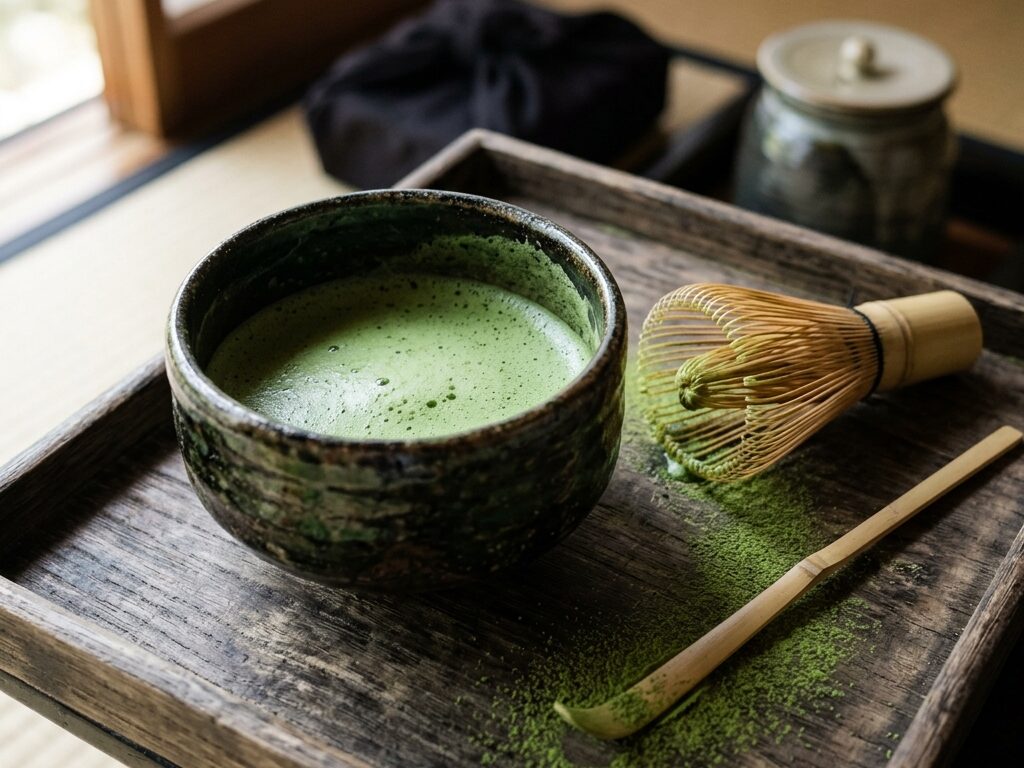
- Ceremonial is the sip-me-slowly kind, traditionally whisked with hot water and enjoyed on its own.
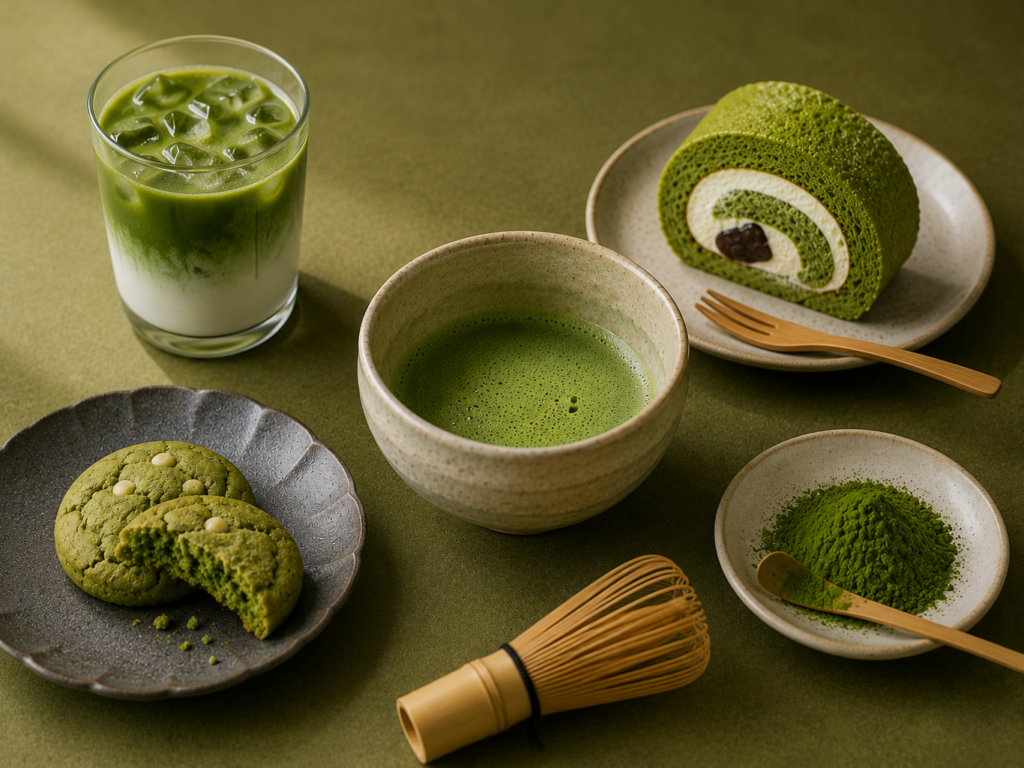
- Culinary is the mix-me-in kind, designed for lattes, baking, and smoothies where other ingredients will be present.
Almost everything else—color, taste, texture, and price—stems from that fundamental difference in purpose. Think of it like cooking with wine. You probably have a bottle you’d save for a special dinner and another you’d happily pour into a pasta sauce. Both have their place, but one isn’t meant to be the star of the show on its own.
New to matcha entirely? Start with our What Is Matcha? A Beginner’s Guide and then come back.
It All Starts in the Field
The real story begins weeks before anything gets ground into powder.
Ceremonial matcha comes from pampered leaves. For about 20–30 days before the first spring harvest, farmers cover the plants to block the sun. That shade does two magical things: it pumps up chlorophyll (hello, electric green) and boosts L-theanine — the amino acid behind that smooth, sweet, gently calming flavor. These are the firstborn leaves of the plant: youngest, most tender, spoiled rotten.
Culinary matcha usually comes from later harvests, with less shade and more sun. Those leaves grow up a little tougher — bolder, earthier, slightly bitter. Less spa retreat, more outdoorsy childhood. Then there’s the grinding: ceremonial leaves are slowly stone-ground into a silky powder, while culinary matcha gets a quicker, less fussy process. That’s part of why it’s cheaper and a touch coarser.
What They Look, Taste, and Feel Like
Put them side by side and the differences jump out.
Ceremonial matcha glows bright emerald. It’s silky, naturally sweet, with deep umami and barely a hint of bitterness. It doesn’t need milk or sugar to taste good. It just does.
Culinary matcha leans yellow-green and grinds a little rougher. The flavor is punchy, earthy, and unapologetically bitter. But that’s not a flaw — it’s the whole point. It’s the loud friend at the party, and it has to be, because it’s fighting through oat milk, vanilla syrup, and whatever else lands in the glass.
So Which One Goes Where?
Here’s where beginners trip up: assuming ceremonial is “the good one” and culinary is “the sad backup.” Nope. That’s like saying a chef’s knife beats a bread knife. Different tools, different jobs.
Reach for ceremonial when you want to whisk it with hot water (around 70–80°C) and drink it plain — the full ritual, the real flavor. Grab culinary when you’re making lattes, baking cookies, or blending smoothies.
Using ceremonial in a latte? That’s like cooking with a $200 bottle of wine. Technically fine — but those delicate notes you paid for vanish into the milk. Culinary was built for this, and honestly does it better.
Ceremonial vs Culinary Matcha: Comparison Table
| Feature | Ceremonial Matcha | Culinary Matcha |
| Harvest | First harvest (Apr–May) | Later harvests (Jun+) |
| Shading | 20–30 days | Minimal or none |
| Color | Bright emerald green | Yellow-green |
| Flavor | Sweet, smooth, umami | Bold, earthy, slightly bitter |
| Texture | Ultra-fine, silky | Slightly coarser |
| Best for | Drinking plain with water | Lattes, baking, blending |
| Price | Higher | More affordable |
| L-theanine | Higher (due to shading) | Lower |
How to Shop Without Getting Burned
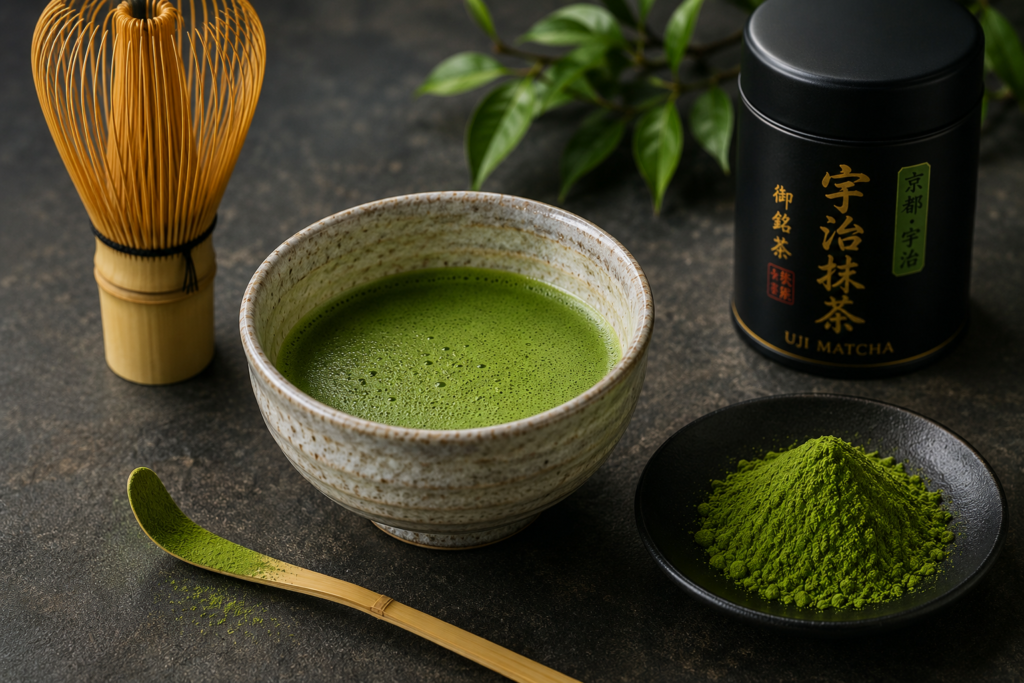
Since these labels aren’t regulated, quality is all over the map. A “ceremonial” sticker guarantees nothing. Here’s what actually matters: check the origin (Japanese matcha from Uji or Nishio is the gold standard — vagueness is a red flag), trust the color (vivid green good, dull yellow bad), mind the freshness (matcha fades fast, so look for harvest dates and use it within 4–6 weeks of opening), and scan the ingredients (it should say one word: matcha).
If you’re just starting out, a good culinary matcha will take you far — flexible, affordable, forgiving. Then, when you’re ready to level up, try a ceremonial grade the traditional way. Just once. Whisked with hot water, nothing added. Sit somewhere quiet and actually taste it. That’s the moment you’ll understand why people get a little obsessive about this stuff.
And plenty of matcha lovers? They keep both on hand — one for the morning ritual, one for the afternoon latte. That’s not overcomplicating things. That’s just matching the right tool to the right moment.